
In 1554, at the Louvre, the Valois court welcomed, alongside ballet master Pompeo Diobono, a large group of musicians — among them violinists who, wither their galliards and other balli, swept Queen Catherine and her ladies-in-waiting into feverish dances… These were the beginnings of a form of entertainment that would keep developing between Paris and Florence, right up to the birth of opera: the court ballet. A collective work, to which the greatest names contributed — poets, musicians, even painters — it staged the court nobles in a choreography whose harmony was meant to reflect the peace of a kingdom, yet one increasingly torn apart by the Wars of Religion. A great lover of dance and music, Catherine gave these entertainments a genuinely political role. A musical history of the Queen thus reveals a little-known side of the sovereign, steeped in humanist ideals and endowed with a rich poetic culture.
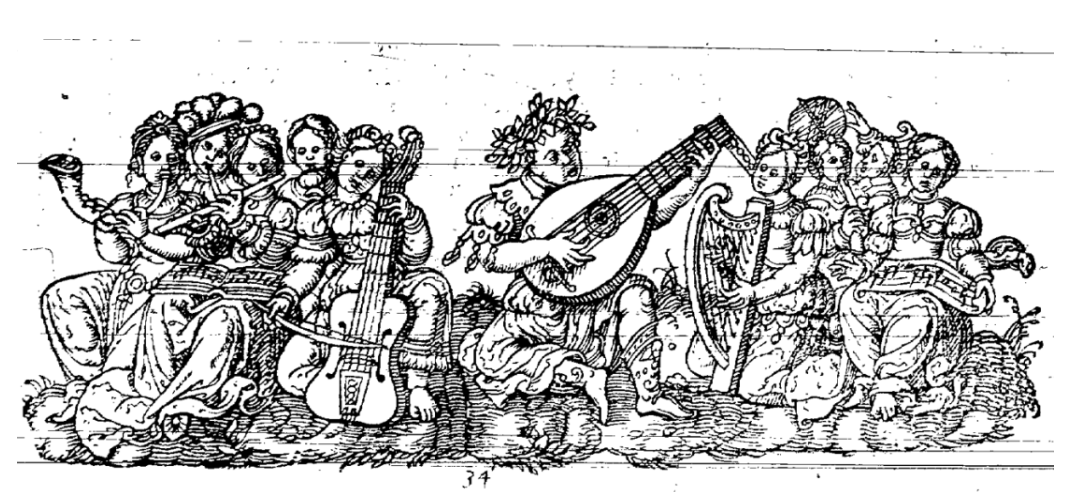
With works by Roland de Lassus, Jacques Arcadelt, Girard de Beaulieu, or even the Huguenot Claude Goudimel, Comet Musicke will call to mind the memorable royal entertainments that were the Ballet des Polonais in 1573 — staged by Antoine Caron and whose music was composed by Lassus himself — or the Ballet comique de la Reyne in 1581 — such a success that the programme of the festivities was published the following year — but also more intimate vocal and instrumental pages (madrigals, cantiques, songs) reflecting the rich polyphony of the Renaissance, alongside dance pieces. To this end, the ensemble gathers around a consort of strings (violins, vielles and viols), instruments characteristic of that period (flutes and cornettse) and, of course, voices, drawing on the versatility of its musicians.
Performers: 6 musicians