
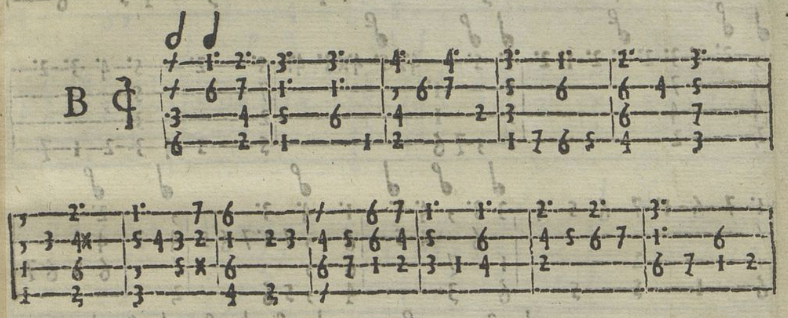
In 16th-century Spain, keyboard music played a major role, both at court and in church. The most influential musician and composer of the period is undoubtedly Antonio de Cabezón (1500 – 1566). At the court of the Empress Isabella and later of the future King Philip II, he travelled throughout Europe and influenced many composers.
Antonio de Cabezón introduced to Spain the art of instrumental variation for keyboard: tientos, obras, diferencias, glosas. It is worth noting that he was also a pioneer in writing instrumental variations on songs and motets by contemporary European composers, as well as on popular song themes. The art of “diminution” would subsequently flourish widely.
His son Hernando, himself a brilliant composer, realised very early on that four-part organ pieces could be beautifully transferred to string instruments (vihuelas).
With its consort of viols and vielles, Comet Musicke – with Benjamin Alard on organ – sets out to demonstrate the importance of Antonio de Cabezón’s work and to illustrate his rich contribution to Spanish music for keyboard and for string instruments:
- the use of plainchant and fauxbourdon in Antonio de Cabezón’s music
- the influence on Antonio de Cabezón of some of his predecessors (J. Ockeghem, Josquin des Prés) and his way of devising an innovative instrumental form from their compositions/songs
- the art of the glossed song (Antonio de Cabezón, Hernando de Cabezón, Francesco Palero), pieces drawn notably from the Libro de cifra nueva
- the legacy left by Antonio de Cabezón in Spain in the 16th and 17th centuries (Sebastián Aguilera de Heredia, Francisco Correa de Arauxo, Pablo Bruna…)
Performers
Benjamin Alard – organ
Aude-Marie Piloz – viola da gamba
Francisco Mañalich – tenor & viola da gamba
Cyrille Métivier – vielle & cornett
Daniela Maltrain – viola da gamba