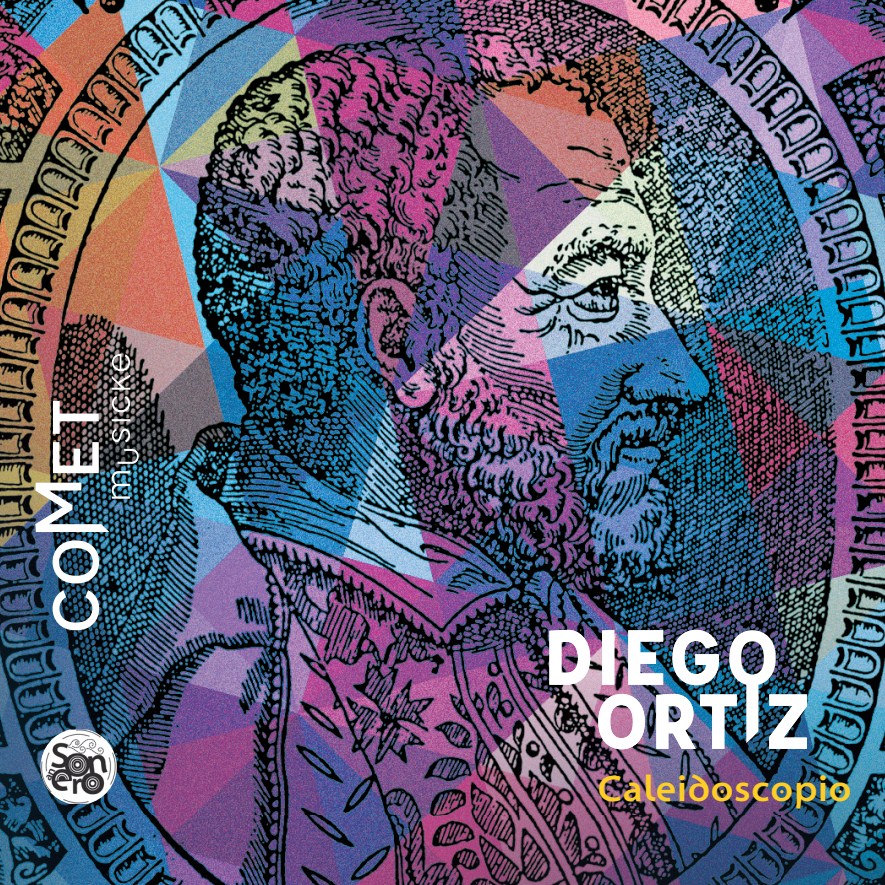
recorded in 2020, Caleidoscopio is almost entirely devoted to Diego Ortiz (2 CDs – Son an Ero label)
recorded in 2018, Quinze revolves around G. Binchois and J. Ockeghem (2 CDs – Son an Ero label)
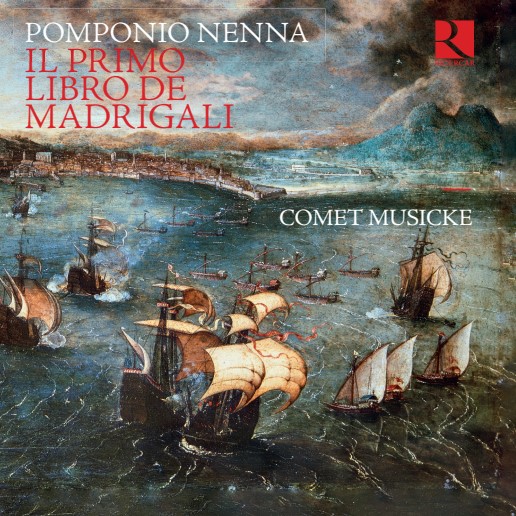
Il primo libro de madrigali a cinque voci
Pomponio Nenna
Recorded in 2025, this disc is devoted to Primo libro de madrigali a cinque voci by Pomponio Nenna (1556 – 1608). This Livre is a world première recording! The disc has won the Preis der Deutschen Schallplattenkritik, as well as 5 Diapasons!!! You can order this disc by clicking here. Who better than Catherine Deutsch to talk about this disc:
“With this recording of the Primo libro de’ madrigali a cinque voci by Pomponio Nenna, the ensemble Comet Musicke reveals a joyful and radiant music. Born in Bari, in Apulia, in 1556, Nenna was a young man of 26 when he published this book in Venice in 1582. It is his very first opus. Nenna was not, strictly speaking, a professional musician. He belonged rather to the flourishing category of gentleman composers at the turn of the seventeenth century. As he states on the frontispieces of all his publications, Nenna inherited the title of “cavaliere di Cesare“, which his father had received from the very hands of Emperor Charles V in 1533. The imperial eagle has since adorned the family coat of arms. In 1582, Nenna had just been “elected” to the government of Andria, a small Apulian town on the Adriatic coast, some fifty kilometres north of Bari. He owed his good fortune to Fabrizio Carafa, Duke of Andria and Count of Ruvo. A perfect courtier, Nenna dedicated his first book of music to him in gratitude, celebrating at the same time the birth of Antonio Carafa, the first son of his benefactor and of the latter’s wife, Maria. The Carafa family, like most Neapolitan patricians, then lived in Naples, on the other side of the Apennines, rather than on their Adriatic fiefs.
Nenna evokes the birth of little Antonio in his dedication, but also in his music. The collection indeed opens with a madrigal in six parts, Poi che legato il piè mi tien sì forte, on a canzone by an anonymous poet, a long strophic poem devoted entirely to singing the child’s happy birth and, incidentally, the praises of his father. Even though he signs the dedication of his book from Naples, rather than from Bari or Andria, Nenna stages the distance that separates him from his protector: “Since my foot is held so strongly bound, not by reason but by fate, and the harsh golden chain forbids me to go where desire leads me, I would, great Duke, turn myself into wind so as to be able to come where you are.” But Nenna charges the music with carrying his message: “Go, song, where I cannot go”, the last section of the piece tells us, in the manner of a troubadour’s envoi.
To set these joyful verses to music, Nenna adopts the vein of the light madrigal, popularised by Luca Marenzio in the early 1580s: a lively and radiant music, “pleasant to the ear” (“grata all’orecchie“), as Vincenzo Giustiniani would call it years later in his Discorso sulla musica de’ suoi tempi (1628). The interweaving of voices is frequently structured into highly legible harmonic areas, giving the music a gentle sense of whirling euphony; the melodies follow lively and playful rhythms; the artifices of counterpoint are never at the expense of listening pleasure. Nenna’s music is a touching testimony to the festivities organised for Antonio’s birth on the Duke’s fiefs: “Thousands of drums and bells are heard at all hours”, “the lights burning at the windows all around… in every street, in every place, the fire burning without respite turns a dark night into a bright day”. Nenna depicts these joyful scenes through as many ingenious figuralisms, demonstrating through his music his emotional attachment to the Carafa family.
Nenna sets texts of varied origins to music: many are by unknown authors, others are from the hand of Petrarch (the madrigal in two parts on the sonnet Lieti fiori et felici et ben nate herbe), of Remigio Nannini (the madrigal in two parts on the sonnet Itene o miei sospir ch’accesi in quella), of Lodovico Paterno (Dolce mio foco ardente) and, more singularly, of the poetess Chiara Matraini Contarini (Dalla più bella mano). The other texts are anonymous and, for the most part, would be set to music only by Nenna.
Even though the madrigals of this collection present a variety of ethos, covering a wide emotional palette, the pointer is clearly placed on the side of the joy of living, as evidenced by a series of pastorally inspired texts. Nenna gives pride of place to flowers and wild grasses, to tender green leaves, to young saplings. Thus the Petrarchan sonnet which opens with an apostrophe to the “joyful and happy flowers, and well-born grasses”, or the anonymous madrigals “Graceful grasses, green leaves and joyful flowers” and “Lilies, roses and violets” (Vagh’erbe verde frondi e lieti fiori and Gigli, rose e viole). Nature rejoices at the birth of the future Duke of Andria, who would live long enough to take his father’s succession and perpetuate the Carafa line, since he died in 1621, after having had six children.
Yet the dark side also surfaces here and there in the book, even if it is still only a harmless shadow, intended more to set off the light. The dissonances accumulate in D’ogni ben casso e privo, on an anonymous text: “For you, lady, I live, and under so hard a fate, it is no longer living, it is far worse than death.” It is nevertheless the darker vein that would triumph in Nenna’s later collections, as in the late Neapolitan madrigal as a whole under the leadership of the Prince of Venosa, Carlo Gesualdo. The history of style and the history of people echo each other here. In 1590, Fabrizio Carafa was murdered by Carlo Gesualdo. Fabrizio had begun an adulterous affair with Gesualdo’s wife, Maria d’Avalos. Caught in flagrante delicto, Gesualdo had them killed by mercenaries while witnessing the murder, a double homicide that threw the European courts into turmoil and would inspire a whole scandalous literature well into the seventeenth century. The Neapolitan tribunal, for its part, judging that the “cause is just”, quickly closed the case. As the Carafa family sought to take justice into their own hands, Gesualdo lived for several years under the threat of a vendetta, even on his own lands.
Nenna, for his part, eventually entered the service of his first protector’s murderer and worked at the court of Carlo Gesualdo between 1594 and 1599. The two composers then developed an astonishing stylistic symbiosis, setting the same verses to music, pushing the language of the polyphonic madrigal to its last limits by exploring the full pathetic expressiveness of dissonance and chromaticism. The times were no longer for celebration.
Another protagonist lived these tragic facts and stylistic metamorphoses at close hand: Giovanni de Macque. A leading figure of Neapolitan music, a virtuoso organist, master of the city’s most prestigious chapel, teacher to numerous disciples – including Giovanni Maria Trabacci – and a good family man, Macque lived at Gesualdo’s court in the second half of the 1580s. He left the prince’s service in 1590, a few months before his patron committed his double homicide. He probably guided Gesualdo at the beginning of his composing career, initiating him into the most advanced contrapuntal techniques. In 1586, Macque published three of the prince’s ricercares in his collection of Ricercate and canzoni francese, dedicated to Gesualdo – Macque’s Canzone IV was published for the first time in this volume. Macque would compose sumptuous madrigals, but he is better known today for his refined instrumental music, his ricercares of extremely sophisticated counterpoint and his experimental chromatic pieces with their “extravagant consonances”. Even if Macque probably composed them at the keyboard, they are intended for all kinds of instruments, and even, possibly, for voices. The consort of viols adopted for this disc makes all the parts of the polyphony vibrate in an unprecedented way, making us rediscover these classics of Neapolitan keyboard music in a new light.”
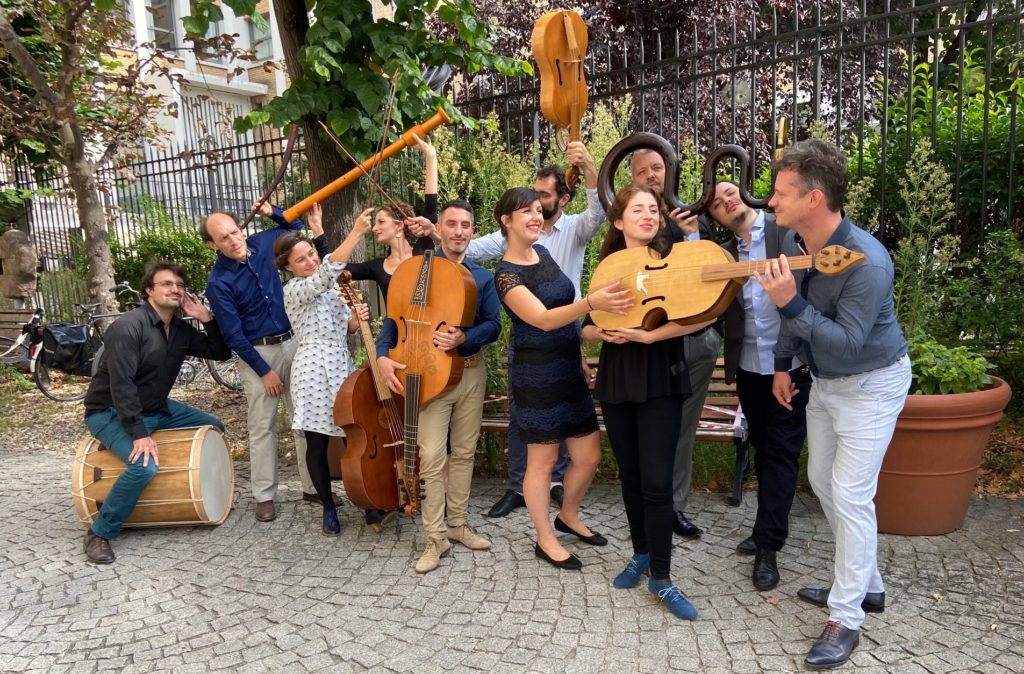
Recorded in 2020, “during lockdown”, this disc is largely devoted to Diego Ortiz, a figure well known to players of early music for his Trattado de Glosas of 1553 and his famous virtuosic diminutions; yet his sacred output, gathered in the Musices Liber Primus of 1565, had almost fallen into oblivion. The disc received 5 stars from Melómano magazine and was rated 5/5 by the online review ON-Mag.fr!
This programme is therefore an opportunity to rediscover very rare motets from this corpus. Ortiz shows here his full mastery of polyphony, a synthesis of multiple influences, from the Franco-Flemish school to Spanish songs. One also finds the rhythmic inventiveness of the diminutions, highlighted by the use of instruments doubling or replacing the sung voices, as the author suggests in his preface. Polyphonic songs, organ pieces played by a consort of strings or ornamented madrigals complete this unprecedented portrait, in which virtuosity serves a richly ornamented composition. With a line-up of voices and melodic instruments, we sought to build a kaleidoscope revealing a sound portrait of Diego Ortiz by assembling, through highly varied instrumentations designed to highlight the counterpoint, pieces of equally diverse nature organised around his recercadas and his motets. By placing these works back in their context – including in the programme compositions by Hernando de Cabezón, Jacques Arcadelt and Francisco Guerrero among others – and by refusing to order them according to their sacred or secular nature, we hope to share with the 21st-century listener a more complete vision of one of the most remarkable composers of the 16th century.
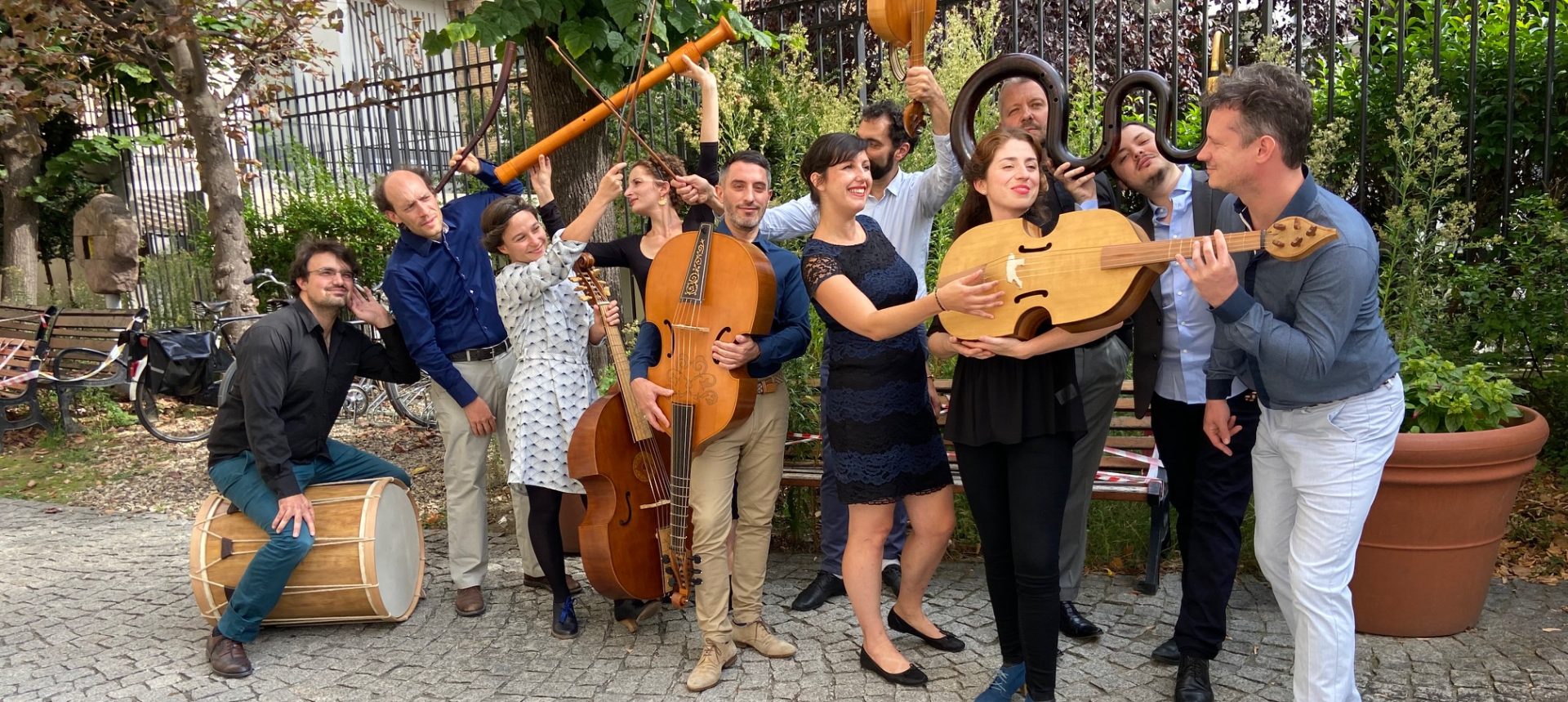
Cast: Francisco Mañalich – tenor & viola da gamba / Marie Favier – alto / Aude-Marie Piloz – viola da gamba & tiple / Cyrille Métivier – corneti, vihuela de arco & alto / Camille Rancière – vihuela de arco & baxo / François Joron – tenor / Daniela Maltrain – vihuela de arco & tiple / Sarah Lefeuvre – tiple & flautas dulces / Jan Jeroen Bredewold – baxo / Patrick Wibart – serpentón & baxo
Quinze
Gilles Binchois / Johannes Ockeghem
Recorded in autumn 2018, the disc revolves around Gilles de Bins, known as Binchois, and Johannes Ockeghem: the story of a Burgundian master and his Flemish pupil. The disc received 5 stars from Classica, the Melómano de Oro distinction from the Spanish magazine Melómano, was listed in Best of 2019 by the Spanish website Codalario, was Record of the Week for ConcertClassic, was rated 5/5 by the online review ON-TopAudio and was Le Disque classique du jour on France Musique!
Quinze. From this century, as far as secular music is concerned, essentially only precious manuscripts remain – and no instruments save those held by angels. This material, carefully illuminated by learned pens, tenuous and fascinating, has fascinated specialists for decades. Comet Musicke‘s gamble, building on the most recent research, is to rediscover the instrumental colours of that lost world, of which we have kept manifold reflections beyond musical notation: the lyricism of poetic language, sometimes tinged with humour, the dazzled chronicles of the Burgundian Court, the reconstruction and magnificence of the Kingdom of France, the power of the colours and forms of a Van Eyck or a Bourdichon… Combining at most fifteen vocal and instrumental timbres, we wanted to give a colourful and opulent interpretation of these polyphonies with their bewitching harmony. We have read in these works the joy, the intimacy and the melancholy of love, but never found austerity in them. Even when Johannes Ockeghem pays tribute to Gilles de Bins, ” Father of Joyousness “, then Josquin to Ockeghem, “Treasurer of Music “, tenderness prevails and the tomb becomes an artistic manifesto as well.
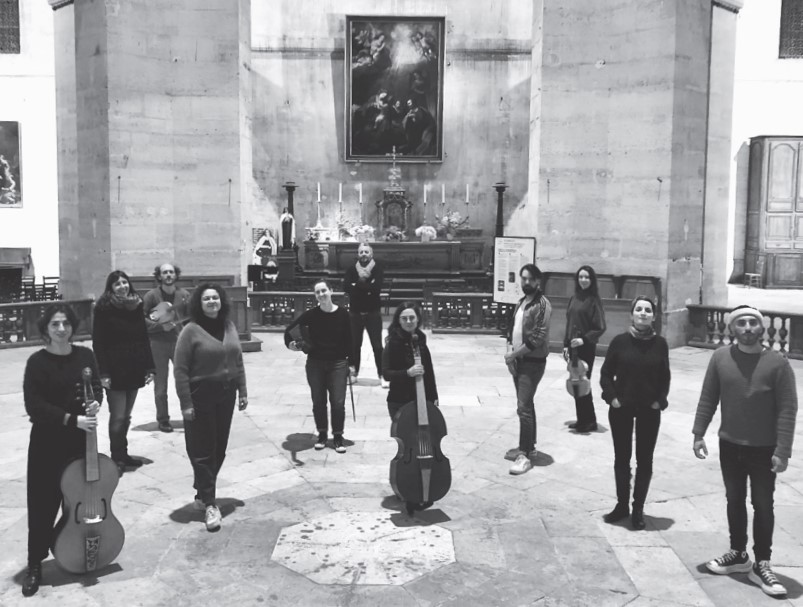
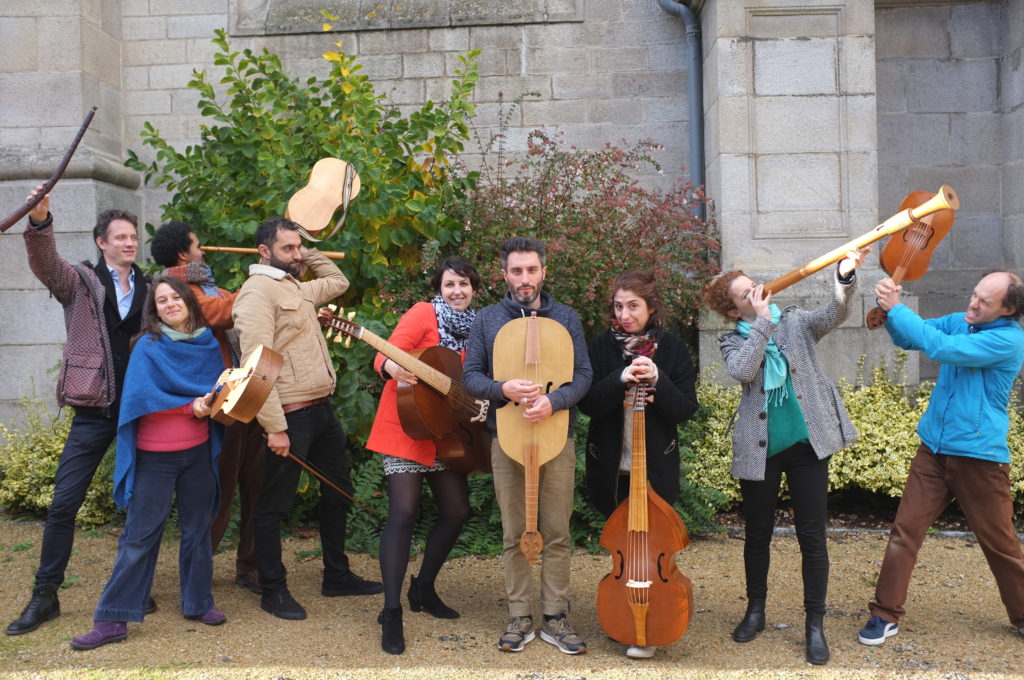
Cast: Francisco Mañalich – tenor, vielle, renaissance viol and artistic direction / Marie Favier – mezzo-soprano / Aude-Marie Piloz – vielle and renaissance viol / Sarah Lefeuvre – soprano and recorders / Daniela Maltrain – viola da gamba / Cyrille Métivier – cornets and rebec / Camille Rancière – rebec / François Joron – baritone / Erwan Picquet – bass