
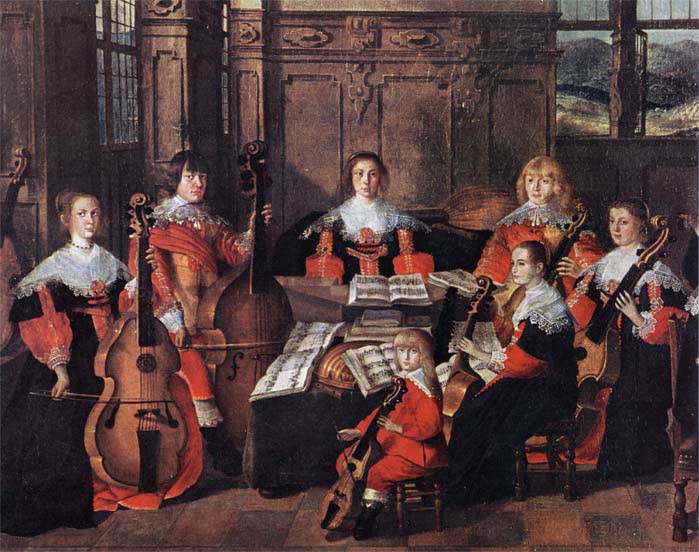
Playing and singing as a family – an instrumental one, that is – is a practice born in England during the Renaissance. The 16th century was a true sound laboratory there: the recorders are played by Anthony Holborne and William Byrd; the viols by Tobias Hume and Alfonso Ferrabosco; the lutes by John Dowland. As for the singers, gathered around a table, they performed music as refined as it was melancholy.
This old practice of playing in consort would give rise to the string quartet and the vocal ensemble. The marriage of different instruments in broken consort would in turn give birth to the accompanied solo. Nothing is better than a consort of bowed strings to accompany the singing voice: a rich texture, an incomparable suppleness and support, allowing the text to be coloured and the poetry of the music to be expressed in a unique way!
Our programme is made up of airs by the main composers of the English Renaissance of the late 16th and early 17th centuries: William Byrd, Thomas Tallis, Thomas Morley, Orlando Gibbons, John Dowland, John Jenkins, William Lawes, Tobias Hume… This glorious lineage would then open the way to Henry Purcell, who would draw inspiration from these predecessors while renewing the musical language.
Performers
Francisco Mañalich – tenor & viola da gamba
Marie Favier – mezzo-soprano
Aude Marie Piloz – viola da gamba
Cyrille Métivier – fiddle & counter-tenor
Camille Rancière – fiddle & baritone